What Makes Laser Hair Reduction the Go-To for Smooth Skin in 2026?
What if ‘smooth for months’ stopped sounding like wishful thinking and started sounding like a plan? In this guide I’ll map exactly why laser hair reduction has become the default route to long-term smoothness by 2026—and what you’ll learn, who benefits, and what to expect.
What this guide covers (quick map)
- The difference between laser hair reduction and one-off removal methods.
- Practical expectations: sessions, costs, pre/post care, and realistic outcomes.
- Technology trends shaping the future of hair removal and comfort.
- How to choose a provider and when at-home devices make sense.
You’ll finish understanding timelines (typically six to eight sessions spaced 4–6 weeks), realistic budgets (session ranges vary widely by area), and why the industry calls it “permanent hair reduction” rather than absolute hair removal. The laser heats and damages follicles during the anagen (growth) phase—hence repeat sessions are required.
Laser hair reduction is the long-term hedge against the cycle of shaving, waxing, and irritation.
Who this is for
- People ready to trade chronic maintenance for durable results.
- Those comparing cost-per-year of waxing/shaving vs. a multi-session laser plan.
- Anyone with questions about safety, skin types, or at-home vs. clinic options.
Professionals and clinics like Amsterdam Beauty Clinic use state-of-the-art systems and natural, vegan aftercare to improve comfort and outcomes; if you want specifics on the technique and roadmap, see this primer on laser waxing explained.
Why it matters in 2026
The market is booming—projected at over $3.9 billion by 2026 with a ~15.4% CAGR—bringing faster devices, AI-driven parameter tuning (artificial intelligence (AI)), dual-wavelength systems, and better cooling. These advances increase precision, reduce session times, and expand safe treatment across skin tones.
Laser hair reduction isn’t magic, but it’s the most scalable, evidence-backed path to persistent smoothness available today—cost-effective over time and increasingly comfortable thanks to tech innovations.
In short: you’ll learn what to expect, how to decide, and how to plan a cost- and time-efficient route to permanent smooth skin with laser hair removal.
How Does Laser Hair Reduction Work, and What to Expect from Your Treatment?
A single visit won’t give permanent smoothness — but a clearly mapped process will. Below I break the treatment into numbered, easy-to-follow steps so you know exactly what happens from consultation to recovery, and why multiple sessions are required.
- Initial consultation and skin assessment
We begin by assessing your skin type, hair color, medical history, and treatment goals. This determines the ideal device and settings. Expect a discussion about alternative options (including traditional waxing) and a realistic timeline toward hair-free results. If you want a deeper primer, see this piece on “laser waxing explained” for the science and comparison to waxing.
- Patch test and pre-treatment preparation
A small patch test confirms skin reaction and comfort level. Pre-treatment instructions usually include avoiding sun exposure, skipping plucking or waxing for several weeks, and shaving the area 24–48 hours before your session.
- The treatment session — how the laser works
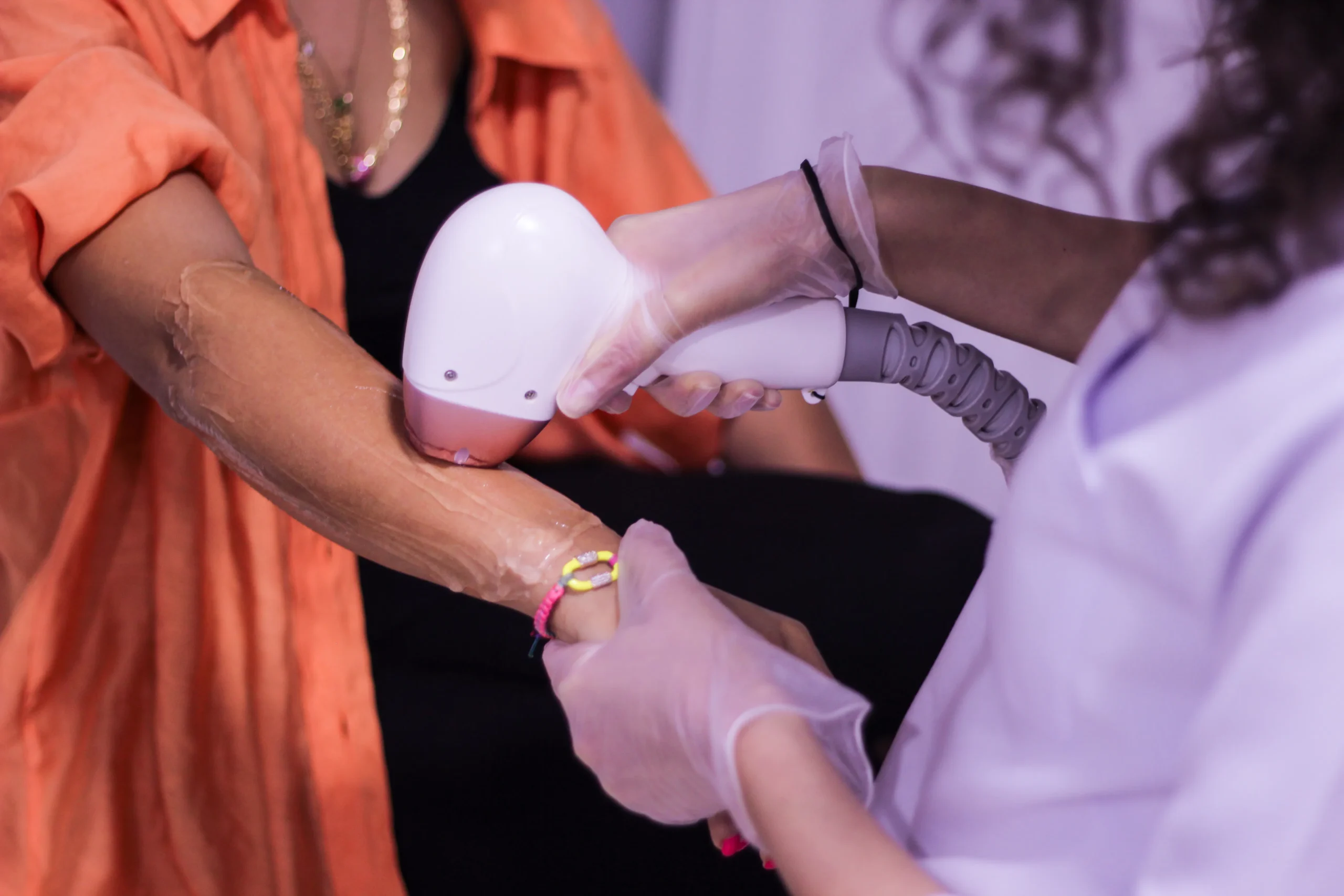
Lasers deliver concentrated light absorbed by hair pigment (melanin). That light converts to heat and damages the hair follicle — specifically the cells that drive growth — while sparing surrounding skin. Modern systems use cooling and pulse control to increase comfort and precision. Laser targets hair during its active growth phase to produce the greatest long-term reduction.
Brief summary: the laser heats and disables hair-producing cells with high precision, minimizing collateral skin damage.
- Why multiple sessions are required
Hair grows in cycles (anagen, catagen, telogen). Lasers work best during the anagen (growth) phase. Because not every follicle is in that phase at once, you need a series of sessions to catch successive waves of growing hair.
Practical guideline: professional laser hair reduction typically requires six to eight sessions spaced four to six weeks apart to reach optimal results. Maintenance touch-ups may be necessary because regrowth can occur over time.
- Comfort, side effects and safety
Treatments are generally well tolerated — sensations range from mild snapping to warm pinpricks. Temporary redness or light swelling is common and resolves in days. At Amsterdam Beauty Clinic, we use state-of-the-art cooling and vegan topical products to reduce discomfort and support healing.
- Post-treatment care and expectations
Avoid direct sun, use SPF, and skip harsh exfoliants for a week. Hair often sheds over 1–3 weeks; this is normal and an encouraging sign. Over the course of several sessions you’ll move from stubbly regrowth to sustained hair-free results.
Final summary: laser hair reduction is a science-driven, multi-step journey. With the right device and a consistent schedule you’ll trade routine waxing and frequent shaving for a longer-lasting, low-maintenance finish.
What’s the Real Cost of Laser Hair Reduction, and How Can You Budget for Brazilian or Bikini Areas?
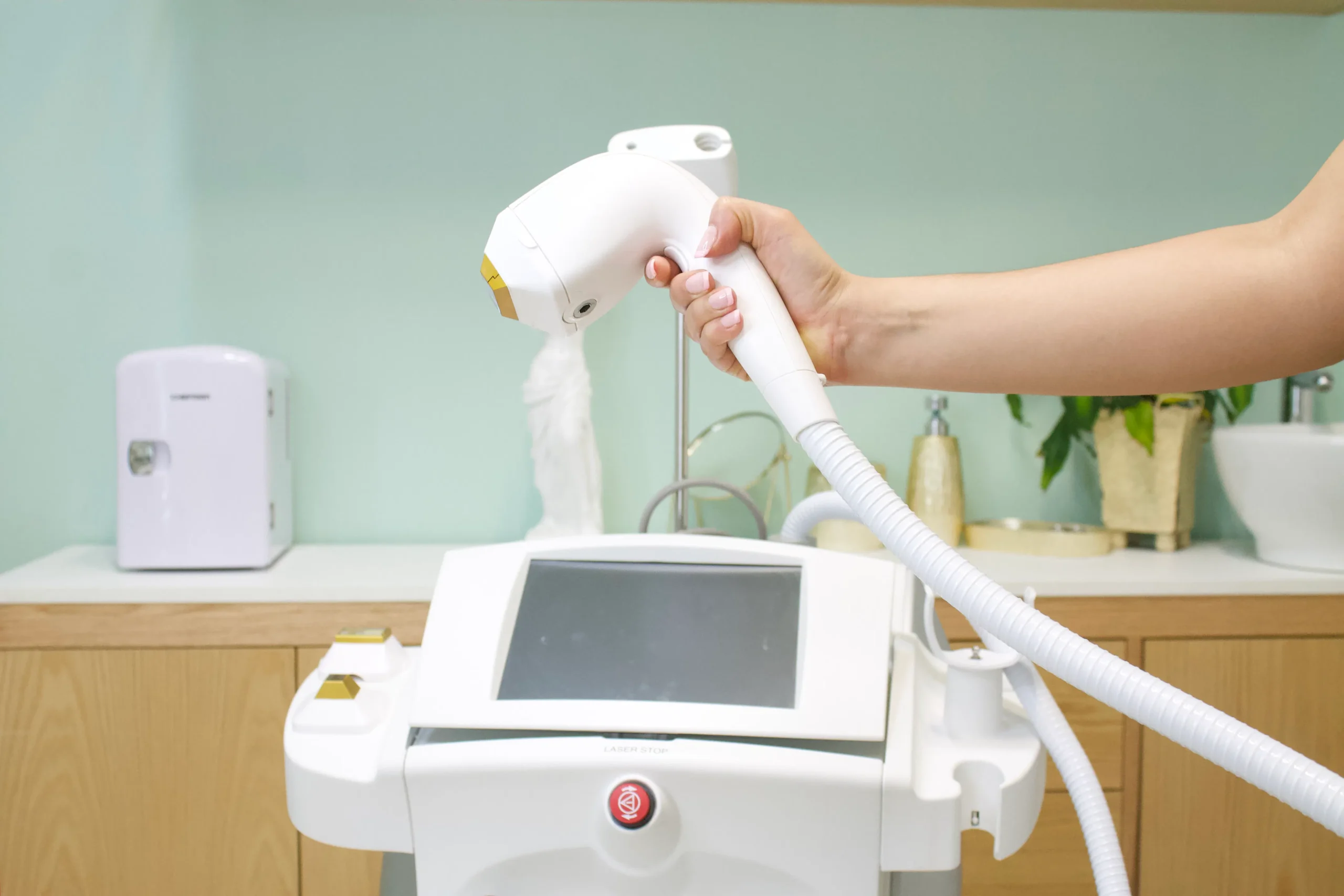
Photo by ANVA Marketing on Pexels
Wondering whether the upfront price for laser hair reduction is worth it — especially for Brazilian or bikini areas? The short answer: yes for many people, but the math matters. Let’s break it down so you can budget confidently.
Real price ranges: what clinics typically charge
Costs vary widely by area and clinic. Typical per-session ranges (industry averages):
- Brazilian/bikini: $150–$350 per treatment (average $241).
- Underarms: $70–$230 per session (average $130).
- Full legs: $250–$500 per session (average $397).
- Full body: $800–$2,000 per session (average $739).
Professional treatments usually need six to eight sessions spaced 4–6 weeks apart to reach optimal reduction. Remember that “permanent hair reduction” isn’t guaranteed to be 100% permanent — occasional touch-ups are common.
In short: smaller zones cost less per session; full-body and large areas cost more. Multiply session cost × recommended sessions to get a realistic budget baseline.
What drives the price?
Several factors change the sticker price:
- Treatment area size and complexity (sensitive zones like a brazilian laser wax can take longer).
- Technology: diode, Nd:YAG, alexandrite, and dual-wavelength systems affect outcomes and cost.
- Provider skill and clinic reputation; experienced practitioners charge more.
- Geography and local demand.
- Packages, promos, and whether follow-up touch-ups are included.
Laser waxing cost isn’t just a single number — it’s a function of equipment, expertise and session count.
Micro-summary: Area + tech + provider = wide cost range; plan for multiple sessions.
A simple budgeting framework (ESTIMATE)
- Estimate per-session price for your area.
- Multiply by 6–8 sessions (use 6 for an optimistic baseline, 8 if hair is dense).
- Add 10–20% for maintenance/touch-ups, numbing products or aftercare.
- Track package deals or seasonal discounts; consider spreading payments.
Example: Brazilian average ($241) × 6 sessions ≈ $1,446 (range ≈ $900–$2,800 depending on sessions and per-session rate).
If you want a clinic that prioritizes advanced, comfortable treatments and natural, vegan aftercare, I recommend exploring Amsterdam Beauty Clinic and reading their guide on “laser waxing explained” for deeper context: https://amsterdambeautyclinic.nl/making-sense-of-laser-waxing-for-lasting-smoothness-by-2026/.
Final takeaway: Laser hair reduction has higher upfront costs than waxing or shaving, but over time — when you account for repeated waxing, kits, and time — it often becomes the more cost-effective route for lasting smoothness. Plan with the 6–8 session rule and look for reputable clinics that bundle sessions to reduce your per-session spend.
What Are the Smartest Tips for Maximizing Your Laser Hair Reduction Success?
Start with intention: better results come from preparation, consistency, and small lifestyle tweaks that make each session more effective. I’ve seen clients double their satisfaction by following a few simple rules.
Pre-treatment: the 3-step PREP framework
- Protect skin from sun 2–4 weeks before treatment; tanning reduces effectiveness and raises risk.
- Reduce active removal methods—no plucking, waxing, or electrolysis for 4–6 weeks; shaving is fine.
- Expect clean, trimmed hair on the day; most clinics ask you to shave 24–48 hours before.
Prepare well and the laser targets follicles, not surface hair — that’s the efficiency win.
Micro-summary: sun avoidance, no waxing, and correct shaving timing set the stage for faster, safer progress.
Post-treatment and lifestyle habits (COOL approach)
- Calm: apply cool compresses or aloe; avoid hot baths and intense exercise for 24–48 hours.
- Observe: use SPF 30+ daily on treated areas for at least two weeks.
- Optimize: gentle moisturizers and fragrance-free products help; avoid retinoids on treated zones for a few days.
- Long-term: regular touch-ups every 6–12 months prolong hair-free results.
Good aftercare reduces complications and keeps you on track toward long-term smoothness.
Micro-summary: cooling, sun protection, and gentle skincare speed recovery and preserve results.
Efficiency hacks, pitfalls, and practical trade-offs
- Book sessions 4–6 weeks apart to hit hair in the anagen phase. Missing sessions stretches the timeline.
- Track progress with photos under consistent light; small regrowth often looks worse than it is.
- Choose clinics using advanced systems and experienced technicians—technology matters for comfort and outcomes. For clinic-level guidance on choosing treatments and technology, see Amsterdam Beauty Clinic’s laser hair removal overview.
The smart trade-off: invest in professional sessions and consistent care now to save time, money, and irritation compared to endless waxing.
Micro-summary: follow timing, document progress, and prioritize proven tech for the most reliable path to permanent smooth skin and lasting hair-free results.
Can You Troubleshoot Common Issues and Ensure Optimal Hair-Free Results?

Photo by Anna Tarazevich on Pexels
Rapid troubleshooting for common post-treatment hiccups
A little redness, a couple of ingrown hairs or brief pigment changes are normal after professional laser hair reduction — they don’t mean the treatment failed. What matters is how you respond. Below I give clear, clinic-tested fixes so you keep moving toward reliable hair-free results.
Quick fixes that actually work
- Redness and mild swelling: apply a cool compress for 10–15 minutes, use a gentle aloe or fragrance-free moisturizer, avoid hot showers for 24 hours.
- Itching or follicular bumps: try a short course of a mild hydrocortisone cream (over-the-counter), stop exfoliation for 48 hours, and switch to non-comedogenic products.
- Ingrown hairs: use a BHA (salicylic acid) 1–2x weekly, gentle physical exfoliation after 48–72 hours, and avoid picking.
- Hyperpigmentation or dark spots: broad-spectrum SPF daily and topical vitamin C; pigment changes usually improve over weeks but benefit from professional follow-up.
- Blisters, severe pain, spreading redness or pus: immediate clinical assessment — do not self-pop or apply home remedies.
Simple first rule: soothe, shield, and observe before escalating.
The S.T.E.P. troubleshooting framework
- Soothe: cool, calm, gentle products.
- Track: photograph changes and note onset/time.
- Exclude: stop topical irritants (retinoids, peels) until healed.
- Professional consult: call your provider if symptoms worsen or persist.
Micro-summary: start with conservative care, document changes, then escalate to a professional if needed.
When to call your clinic (or seek urgent care)
Seek professional advice for large blisters, signs of infection (fever, increasing pain, pus), severe pigment shifts lasting more than six weeks, or unexpected allergic reactions. For personalised follow-up and to learn how advanced protocols reduce side effects, contact Amsterdam Beauty Clinic or read our guide on laser waxing explained. Their expertise with state-of-the-art devices and vegan aftercare products helps most clients reach long-lasting, hair-free results with minimal downtime.
How Are Innovations in 2026 Shaping the Future of Permanent Smooth Skin?
Innovation in hair removal is no longer incremental—it’s directional. The market is on track to exceed $3.9 billion by 2026 (15.4% CAGR), and that scale is fueling clinical-grade breakthroughs and smarter at-home options alike.
Clinics and manufacturers are converging on three practical priorities: precision, comfort, and speed. Expect to see more dual-wavelength professional systems combining Alexandrite (Alex) and Nd:YAG lasers to treat a wider range of skin and hair types in fewer passes. At the same time, larger spot sizes and faster pulse rates compress session time without sacrificing efficacy.
Artificial Intelligence (AI) — short for Artificial Intelligence — is being layered into devices for real-time skin and hair detection. AI-driven parameter optimisation reduces guesswork, minimises side effects, and makes treatments more consistent between operators. That matters because laser hair reduction still requires multiple sessions timed to hair growth cycles; better targeting increases each session’s yield.
Bold, clinic-grade cooling technologies and improved contact cooling mean treatments are noticeably more comfortable than five years ago. Comfort sells repeat visits; comfortable treatments deliver better adherence and therefore better long-term smoothness.
Micro-summary: Dual-wavelength systems, AI tuning, and faster delivery are making professional sessions more effective and comfortable.
The at-home market is catching up. Modern IPL (Intense Pulsed Light) and diode-based devices now include multi-intensity settings, cooling attachments, and specialized caps for body zones — narrowing the gap with clinic results for maintenance work. Expect subscription models and hybrid care (clinic start, home maintenance) to become mainstream.
Regulatory and safety improvements will push devices to be smarter about skin tone detection and energy modulation, reducing risk and broadening suitability. However, clinicians and consumers should remember: “permanent smooth skin” in marketing usually means permanent hair reduction, not absolute permanence — occasional regrowth remains possible.
Micro-summary: At-home advances and smarter safety will make long-term maintenance cheaper and more accessible, but realistic expectations remain essential.
At Amsterdam Beauty Clinic we monitor and adopt these advances to offer effective, minimally uncomfortable treatments. For a deeper technical primer on the evolution of laser waxing and long-term results, see the guide on permanent hair reduction. Learn about our full range of services, including laser hair removal, on Amsterdam Beauty Clinic’s services page.
Ready for Persistent Smoothness: What’s Your Next Step?

Photo by cottonbro studio on Pexels
Having explored the science and strategy of laser hair reduction, your path to long-term smoothness begins with action. At Amsterdam Beauty Clinic, a personalized consultation awaits, where specialists craft a precise plan based on your skin type, hair color, and target areas. Professional laser hair removal requires six to eight sessions, spaced four to six weeks apart, ensuring optimal efficacy and lasting hair-free results. Imagine the freedom of fewer daily rituals, relief from ingrown hairs, and the confidence of hair-free results. While single sessions vary, packages offer value for enduring outcomes. This is more than hair removal; it’s about embracing the confidence of permanent smooth skin.
We invite you to book with intent. A tailored plan, coupled with our expert guidance and your follow-up, is the most direct route to reliable hair-free results. For a deeper understanding, read our guide on laser waxing explained. To explore treatments and pricing, view our professional laser hair removal treatments.
Your Path to Persistent Smoothness: A Final Checklist
- Consultation: Get your personalized plan.
- Adherence: Follow your session plan.
- Protection: Care for your skin.
- Tracking: Monitor progress for optimal hair-free results.
Ready to embrace persistent smoothness? Discover advanced laser hair removal treatments and achieve your hair-free goals with Amsterdam Beauty Clinic.
People Also Ask
What is the difference between laser hair removal and waxing?
Laser hair removal targets hair follicles with light to inhibit future growth, offering long-term reduction. Waxing, on the other hand, removes hair from the root temporarily, requiring frequent repeat treatments and often leading to regrowth within weeks.
How many laser hair removal sessions are typically needed for optimal results?
Most individuals require an average of six to eight sessions for optimal laser hair reduction. These sessions are usually spaced four to six weeks apart to effectively target hair in its active growth phase (anagen).
Is laser hair removal painful, especially for sensitive areas like the bikini line?
While some discomfort can be expected, modern laser technology, often including cooling systems, significantly minimizes pain. Sensitive areas like the bikini line may feel more intense, but the sensation is usually brief and manageable.
What should I do to prepare for my laser hair removal appointment?
Before your appointment, avoid sun exposure, tanning beds, and waxing or plucking the treatment area for several weeks. Shaving the area a day or two prior is usually recommended to ensure the laser targets the follicle effectively.
How long do the results of laser hair reduction last?
Laser hair reduction provides long-lasting results, significantly reducing hair growth over time. While not entirely permanent for everyone, many experience substantial reduction and may only need occasional touch-up sessions years later.
Can laser hair removal be used on all skin and hair types?
Laser hair removal is most effective on dark hair and lighter skin tones because the laser targets pigment. However, advancements in technology, such as dual-wavelength lasers, are making it more effective and safer for a wider range of skin and hair types.