Unpacking the hype around Amsterdam’s ‘Hollywood peel’

When clients walk into our clinic in Amsterdam, they often ask about the ‘Hollywood peel,’ curious about the magic behind its glowing reputation. It’s certainly a popular choice, especially for those seeking that radiant “Amsterdam Glow” without significant downtime, but its popularity has unfortunately led to a flurry of confusing information online. I’ve noticed a real disconnect between what people think this carbon peel does and what it actually accomplishes for their skin.
Why separating carbon peel facts from fiction matters
Honestly, the sheer volume of misinformation out there about carbon laser facials is a problem. You might hear it’s a miracle cure for deep acne scars, or that it’s just a fancy facial with no real lasting impact. Neither of those extremes is quite right. Understanding the actual science behind the Q-switched Nd:YAG laser and the carbon solution is pretty important if you want to make informed decisions about your skin health. It helps you set realistic expectations for the treatment and appreciate its real benefits.
What most guides miss is that while it’s excellent for things like refining pores and tackling active breakouts, it’s not a magic wand for every skin concern. That’s why we need to address these common carbon peel misconceptions head-on. If you’re wondering what Amsterdam clients always get wrong about carbon peeling, you’re not alone. The reality is, a lot of the hype overshadows the sophisticated thermal-mechanical exfoliation process it truly is, a process that bridges the gap between a simple facial and more intensive laser resurfacing. We’ll be diving into some key skin treatment myths to give you the real story.
What’s really happening when the laser meets the carbon?
When we talk about a carbon laser peel, it’s not just a fancy facial; there’s some serious science happening beneath the surface. Many clients come to us at Amsterdam Beauty Clinic wondering if it’s truly effective, especially with so much conflicting information out there about professional skin care in Amsterdam. The reality is, this treatment uses a specific, targeted thermal-mechanical process.
First, a liquid carbon solution, made of micro-particles about 40 to 80 microns in size, is applied to your skin. It settles deep into the pores, acting as a chromophore, a light-absorbing target. Then, a Q-switched Nd:YAG laser, typically operating at a 1064nm wavelength, pulses across the skin. This laser light gets absorbed by the dark carbon particles, causing them to rapidly heat and then shatter in a ‘photo-acoustic’ effect.
This shattering action is what really cleans house. It vaporizes the carbon, taking dead skin cells, excess sebum, and environmental contaminants right out of your pores. Research shows a single session can reduce P. acnes bacteria, a major contributor to breakouts, by up to 80%. This makes it incredibly effective for active congestion and achieving that clear Amsterdam glow without harsh downtime.
It’s important to understand this isn’t a deep chemical peel. Chemical peels use acidic solutions to dissolve cellular bonds, which can be quite unpredictable on sensitive skin types. Instead, the carbon peel is a non-ablative process, meaning your skin barrier stays intact, minimizing recovery time. Compared to a Hydrafacial, which focuses on vortex suction and serum delivery for hydration, the carbon peel is more about purification and tightening. You can learn more about what clients often misunderstand about this process in our look at carbon peeling Amsterdam myths.
While you’ll see an immediate refresh, significant collagen remodeling and lasting pore refinement typically require a series of 4 to 6 sessions, spaced a few weeks apart. This isn’t a ‘one-and-done’ solution for deep scarring, for example. And honestly, for those with Fitzpatrick skin types IV-VI, professional expertise is non-negotiable; proper settings ensure the carbon protects surrounding pigment, avoiding hyperpigmentation. Understanding the real science helps us manage expectations and deliver genuine results, differentiating a true skin treatment from fleeting trends. For more details on what to expect, check out our insights on laser facial efficacy.
The enduring myths about your carbon facial, exposed
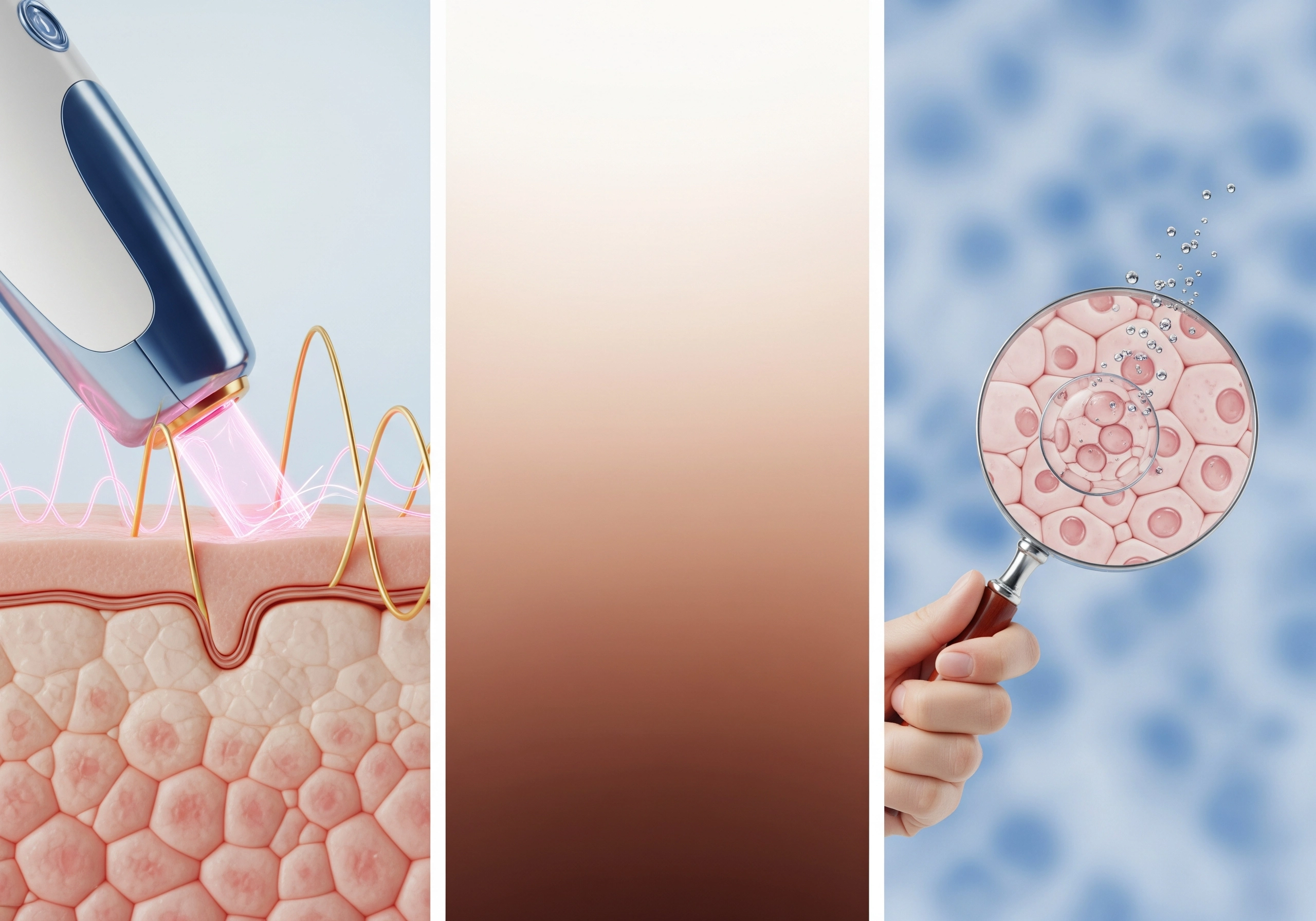
Even with a clear understanding of the science behind the carbon laser peel, many still hold onto outdated carbon facial expectations. The reality is often quite different from what circulates online. I’ve heard these particular myths time and again from new clients, and it’s important we clear the air.
It’s a painful procedure with significant downtime
This is perhaps the most common misconception. Many expect the laser to feel like a harsh, burning sensation, leaving their skin red and raw for days. However, the Q-switched Nd:YAG laser, typically operating at a 1064nm wavelength, works by creating a ‘photo-acoustic’ effect. This means it shatters the carbon particles on your skin, which feels more like a series of gentle snaps or a warm tingling , not pain. In fact, most clients describe it as quite comfortable.
Consider the ‘Zuidas Professional’ scenario I often see. They need a treatment that delivers results without interrupting their busy schedule. Unlike a medium-depth chemical peel, which can lead to 5-7 days of noticeable shedding, a carbon peel typically leaves only a slight, temporary flush. You can genuinely return to your high-stakes meetings or grab a coffee right after. It’s perfect for those seeking the coveted ‘Amsterdam Glow’ without the fuss.
The benefits are only superficial and short-lived
Another prevalent belief suggests carbon peeling benefits Amsterdam residents only superficially, offering just a temporary glow. While immediate skin clarity and a radiant complexion are certainly visible after one session, the process does much more than just clean the surface. The liquid carbon solution, with its tiny 40 to 80 micron particles, penetrates deep into your pores. When the laser hits these, it doesn’t just exfoliate; it also delivers thermal energy into the dermis.
This deep thermal effect stimulates collagen remodeling, which helps tighten pores and improve overall skin texture over time. Research shows a single session can reduce P. acnes bacteria by up to 80%, making it a powerful tool against active breakouts. For significant, long-term pore refinement and collagen synthesis, clinical standards suggest a series of 4 to 6 sessions spaced 2 to 4 weeks apart. It’s a sophisticated thermal-mechanical exfoliation process, not just a quick fix.
It’s unsafe for darker skin tones due to hyperpigmentation risk
This myth is particularly concerning, and it’s one I want to address directly. There’s a common fear among individuals with Fitzpatrick scales IV-VI that the laser will cause hyperpigmentation. The truth is, when performed correctly by a trained and experienced professional, the carbon laser peel is considered safe for darker skin types. The 1064nm wavelength specifically targets the dark carbon particles, largely bypassing the natural melanin in your skin. The carbon acts as a sacrificial target, absorbing the laser energy and protecting the surrounding pigment.
However, this doesn’t always hold true if the settings are incorrect or the practitioner isn’t properly trained. Choosing a reputable clinic is paramount, especially when you’re looking for advanced skin treatments in Amsterdam. At Amsterdam Beauty Clinic, we prioritize expert technique and precise equipment to ensure safety and optimal results for all skin types, giving you peace of mind.
Why do these skin treatment fables stick around?
Ever wonder why some skin treatment myths just won’t die? You show clients the science, real results of a carbon peel, only to hear them repeating old fables a week later. It’s frustrating, isn’t it? These stubborn misconceptions often stem from outdated information, aggressive marketing, and a simple misunderstanding of how advanced treatments truly work.
Technology’s evolution plays a big part. The carbon laser peel, or ‘Hollywood Peel,’ wasn’t always as precise as today’s Q-switched Nd:YAG lasers. Earlier, less sophisticated devices gave inconsistent results, leading people to believe the treatment was superficial or only for certain skin types. This context still shapes expectations, despite advancements.
Then, there’s ‘lunchtime procedure’ marketing. While carbon peeling offers minimal downtime, some clinics overstate results, often skipping the need for 4-6 sessions for collagen remodeling. Clients expecting a ‘miracle cure’ after one visit dismiss the treatment, spreading disappointment as a ‘myth.’ This highlights why it’s so important to be discerning when choosing a beauty salon in Amsterdam. And ignoring warning signs can lead to serious issues; it’s smart to know what happens when you ignore red flags at an Amsterdam beauty salon.
Conflicting information also plays a role. Anecdotes and social media shape opinions, often confusing carbon peeling with harsher peels or ablative lasers. This creates fear, particularly about hyperpigmentation on darker skin tones (Fitzpatrick scales IV-VI). However, a properly performed carbon peel actually protects surrounding pigment. At Amsterdam Beauty Clinic, we clarify these distinctions, ensuring clients understand their skin treatment options.
Navigating the noise: how to spot genuine carbon peel advice

So, myths about treatments like the carbon peel don’t just disappear. They linger because information is everywhere, but genuine expertise often hides behind marketing fluff. This makes it tough to sort the real Amsterdam carbon peel facts from pure fiction. You need a strategy to cut through the noise.
Spotting the Red Flags in Carbon Peel Advice
First, be wary of promises that sound too good to be true. If a clinic advertises a “one-and-done miracle cure” for deep acne scars using a carbon facial, that’s a major red flag. I’ve seen too many people disappointed because their carbon facial expectations were unrealistic from the start. True skin transformation takes time and a series of treatments. Another warning sign: ridiculously low prices without any explanation of the technology or practitioner’s qualifications. You just don’t get advanced laser equipment and expert care on the cheap.
What Reputable Advice Looks Like
Genuine advice centers on science. A professional will explain how the Q-switched Nd:YAG laser works with the carbon particles to achieve exfoliation and stimulate collagen. They’ll talk about the photo-acoustic effect, not just vague ‘skin rejuvenation.’ They’ll be upfront about the need for multiple sessions,typically 4 to 6, spaced 2 to 4 weeks apart,for significant results. They won’t promise zero downtime either, as a slight flush is completely normal. And they’ll discuss contraindications, like certain medications or skin conditions.
Verifying Information and Finding Experts
Don’t just take a clinic’s word for it. Ask specific questions during your consultation. What kind of laser do they use? What training does their technician have? A good provider will welcome these questions. For professional skin care Amsterdam has many options, but clinics committed to transparent, evidence-based practices are your best bet. We, for example, lay out clear information on our carbon peeling procedures and all our other advanced skin treatments. You can find more details on our approach to aesthetic services on the Amsterdam Beauty Clinic website.
Look for providers who aren’t afraid to discuss potential downsides or manage your carbon facial expectations realistically. They might mention that while carbon peels are excellent for active breakouts and surface texture, they won’t fix deep scarring overnight. This kind of honesty builds trust. It tells you they care about your results, not just making a quick sale.
Making informed choices for your Amsterdam glow
After all our discussion about spotting misinformation, what’s the real takeaway for your quest for that radiant Amsterdam glow? It’s simple: informed choices lead to better skin outcomes. You’ve seen that the idea of a carbon laser peel being some painful, superficial gimmick just for light skin types simply isn’t true. The science behind it, using a Q-switched Nd:YAG laser and those tiny carbon particles, shows it’s a sophisticated thermal-mechanical exfoliation that really helps with active breakouts and refines texture over time.
To truly understand the carbon peeling benefits Amsterdam offers, you’ve got to appreciate it as a series of treatments, not a magic bullet. We’re talking about reducing P. acnes bacteria by up to 80% and seeing real collagen remodeling with consistent sessions. This isn’t just a quick facial; it’s a smart approach to skin health, especially when you’re dealing with the city’s unique environment and pollution levels.
So, when people ask, “is carbon peel safe?” my answer is always the same: it absolutely can be, but only in the right hands. That’s why professional expertise and precise device settings are so important, particularly for those with Fitzpatrick skin types IV-VI. Improper settings, as we’ve discussed, can lead to complications like hyperpigmentation. A reputable clinic, like us at Amsterdam Beauty Clinic, where you can explore all our advanced skin treatments, always puts your safety and results first. They’ll make sure those carbon laser peel myths don’t stand in the way of your healthy skin journey.
Don’t let misleading information shape your skincare decisions. Ask questions, look for clinics that are upfront, and always feel free to question what doesn’t sound quite right. Your skin deserves nothing less.
Tired of misleading skincare claims? Get the facts and achieve your ‘Amsterdam Glow’ with expert treatments. Book your consultation at Amsterdam Beauty Clinic today.
People Also Ask About Carbon Peels
Is a carbon laser peel painful?
Honestly, most people find it quite comfortable. You’ll feel a slight warming sensation and maybe a snapping feeling as the laser targets the carbon particles. It’s definitely not what most people imagine when they think of laser treatments, and it’s nothing like aggressive resurfacing.
How many carbon peels do I need for noticeable results?
While you might see some immediate improvement in texture and brightness after one session, clinical standards suggest a series of 4 to 6 treatments spaced 2 to 4 weeks apart. This allows for significant collagen remodeling and long-term pore refinement, really giving you that ‘Amsterdam Glow’.
Is the carbon peel safe for darker skin tones?
Yes, it’s generally safe for all skin types, including darker tones (Fitzpatrick IV-VI), when performed by a trained professional. The carbon acts as a target for the laser, protecting the surrounding pigment. It’s crucial, though, to go to a clinic that understands proper settings to avoid any complications.
Can a carbon peel really treat deep acne scars?
It’s not really designed for deep acne scarring. While it’s fantastic for active breakouts, congestion, and improving surface texture, you’d likely need more intensive treatments for significant scar revision. Think of it more as a powerful purifying and tightening treatment.
What’s the difference between a carbon peel and a Hydrafacial?
A Hydrafacial focuses on hydration and gentle exfoliation using serums and suction. The carbon peel, on the other hand, uses a laser to create a thermal-mechanical effect, targeting bacteria, oil, and dead skin more aggressively for purification and pore tightening.
Why are there so many different prices for carbon peels in Amsterdam?
Pricing can vary a lot based on the clinic’s expertise, the technology they use (especially the laser’s quality), and the overall experience. Cheaper options might use less effective devices or lack the skilled practitioners needed for optimal results and safety, so it’s worth looking beyond just the price tag.