Unpacking the carbon peel hype in Amsterdam

You’ve probably scrolled past it on Instagram: the “Hollywood Peel,” or maybe the “China Doll Facial,” promising an instant glow with zero downtime. Here in Amsterdam, the buzz around carbon peeling is huge, and it’s easy to get swept up in the marketing hype. But honestly, what I often see are clients walking into our clinic with a lot of questions,and some serious misconceptions,about what this treatment can actually do for their skin.
It’s a tricky situation because social media tends to prioritize that immediate, perfect photo over the biological realities of skin cell turnover. We’ve noticed that many beauty trends, like carbon peeling in Amsterdam, are shrouded in marketing hype that doesn’t quite match clinical reality. This isn’t just about managing expectations; it’s about ensuring you get the right treatment for your specific skin concerns, especially with Amsterdam’s unique climate factors affecting post-treatment recovery.
So, before you consider a carbon peel, it’s important to separate fact from fiction. We’re going to unpack some of the most common carbon peeling misconceptions circulating in Amsterdam, discussing everything from pore shrinkage and collagen stimulation to the real deal about downtime. At Amsterdam Beauty Clinic, we believe in giving you the clear, honest truth about your skin treatments.
What really happens during a carbon peel, beyond the ‘Hollywood’ label
While the ‘Hollywood Peel’ label certainly grabs attention, it often obscures the precise science behind what makes a carbon peel truly effective. At Amsterdam Beauty Clinic, we find it’s essential for clients to understand the actual process, not just the simplified marketing gloss. This kind of oversimplification, often driven by social media trends and quick-fix promises, frequently leads to misconceptions and unrealistic expectations about what the treatment can achieve.
The mechanism of action
An effective carbon facial relies on a Q-switched Nd:YAG laser, typically operating at a 1064nm wavelength. Before the laser, we apply a thin layer of carbon particles, roughly 10 to 40 microns in size. These microscopic particles penetrate deep into your pores, acting as tiny chromophores, or light-absorbing targets. To really get the full picture, you might want to see what actually happens during a carbon peel session in Amsterdam.
When the laser’s pulse energy hits these carbon particles, they rapidly shatter. This creates a photo-acoustic effect, which exfoliates the outermost layer of dead skin cells and effectively vaporizes sebaceous plugs, those often responsible for enlarged-looking pores. So, that initial ‘pore-shrinking’ effect many notice is really a deep cleansing, offering a temporary optical illusion that typically lasts 2 to 4 weeks, not a permanent structural change. It’s a common misunderstanding, fueled by quick before-and-after photos, that this effect is lasting.
Beyond surface-level exfoliation
Beyond the immediate exfoliation, the thermal energy generated during this process can stimulate fibroblasts. This initiates a mild collagen remodeling response. But honestly, significant long-term collagen synthesis usually requires a series of 4 to 6 sessions, spaced about three weeks apart, rather than just one treatment. A single pass is largely an exfoliative event.
And remember, the surface heat can reach 50-70°C. If an experienced practitioner doesn’t manage this carefully, there’s a definite risk of post-inflammatory hyperpigmentation (PIH), especially for darker Fitzpatrick skin types (IV through VI). That’s why picking a highly reputable clinic, one experienced in advanced skin treatments in Amsterdam, is so important for both safety and good results.
The most common carbon peel myths, debunked with clinical facts
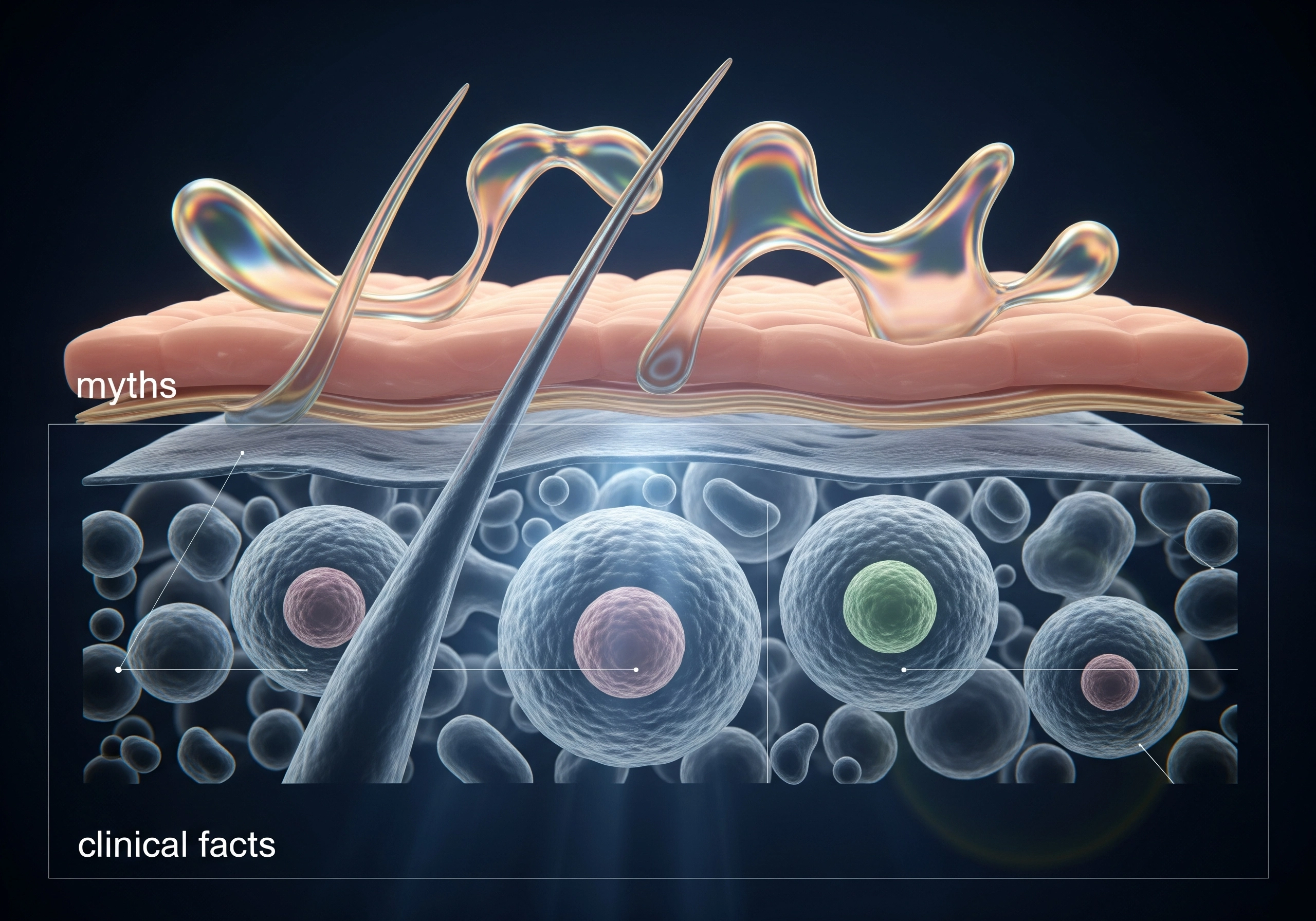
Despite the alluring promises of an instant transformation, the reality of carbon peeling often diverges from the marketing hype we see in Amsterdam. For instance, while many clients hope for a permanent fix, studies show the optical illusion of smaller pores from a carbon peel lasts only 2 to 4 weeks. This isn’t because the pores physically shrink, but because the Q-switched Nd:YAG laser clears out sebaceous plugs, making them appear less noticeable.
Myth 1: Carbon Peels Permanently Shrink Pores
What most people don’t realize is that pore size is largely genetically determined. Carbon peels effectively cleanse the pores by fragmenting carbon particles that have penetrated the sebaceous glands, taking accumulated oil and debris with them. This deep cleaning gives a beautifully refined look, but it’s a temporary effect. It’s like cleaning a window; the window itself doesn’t shrink, it just looks clearer.
Myth 2: A Single Carbon Peel Session Will Remodel Collagen
While the thermal effect of the laser can stimulate fibroblasts, the cells responsible for collagen production, significant collagen remodeling isn’t a one-and-done deal. Clinical evidence suggests you’d typically need a series of 4 to 6 sessions, spaced about three weeks apart, to see any real structural change in collagen. A single session is primarily exfoliative, providing a superficial glow and improving skin texture. If you’re looking for deeper, more lasting skin rejuvenation, we often discuss other advanced skin treatments at Amsterdam Beauty Clinic that are better suited for that goal.
Myth 3: Carbon Peels Offer Absolutely Zero Downtime in All Conditions
This is a big one, especially in a city like Amsterdam. While many people experience minimal redness, the claim of “zero downtime” can be misleading. I’ve seen clients schedule a carbon peel on a Friday for a Saturday event, only to find they experience mild erythema (redness) or even a temporary “purging” of micro-comedones that can last up to 48 hours. The local climate, with its transition from damp, cold winds to dry indoor heating, can also influence how your skin reacts post-treatment. It doesn’t always hold true that everyone walks out completely refreshed with no visible signs of treatment. It really depends on your individual skin sensitivity and the specific environmental factors.
Myth 4: It’s a Primary Cure for Active Inflammatory Acne
Yes, the thermal energy from the laser can help by killing P. acnes bacteria and temporarily reducing sebum production by up to 30%. That sounds good, right? But the reality is it doesn’t address the underlying hormonal or dietary root causes of acne. So, while it can be a fantastic supportive treatment for managing breakouts and improving skin clarity, relying on it as a standalone cure often leads to a frustrating cycle of rebound breakouts. For persistent acne, a more integrated approach is usually needed.
Myth 5: Carbon Peeling is a Substitute for Deep-Plane Resurfacing or Chemical Peels
This is perhaps the most damaging misconception. A carbon peel is a superficial treatment, designed for refinement and maintenance. It simply isn’t comparable to the deep cellular turnover achieved with chemical peels or the collagen induction from treatments like microneedling, which target deeper atrophic scarring or significant fine lines. There’s also a considerable pitfall in Amsterdam: the market has some non-specialized salons using low-energy, non-medical grade lasers. These devices lack the precision to effectively fragment the carbon particles, leading to thermal injury rather than the intended photo-acoustic effect. This is why choosing a highly reputable and well-equipped beauty salon in Amsterdam is important for both safety and actual results.
Why these misconceptions about laser facials stick around
Even with clear facts debunking common carbon peeling misconceptions, these ideas stick around. Why do people still believe them? I’ve seen a few patterns emerge from my time in the aesthetic industry, especially here in Amsterdam.
Outdated information and aggressive marketing
One big reason is simply old information. Early laser facial technologies weren’t as precise. So, some of the initial limitations or side effects might have created beliefs that no longer hold true for today’s advanced Q-switched Nd:YAG lasers. But the bigger culprit, honestly, is aggressive marketing. Many places brand the carbon peel as the “Hollywood Peel” or “China Doll Facial,” making grand claims about permanent pore reduction or instant collagen boosts that just aren’t clinically accurate. They focus on the perceived luxury rather than the actual science.
The social media echo chamber
Social media plays a huge part too. We’re constantly bombarded with images of perfectly filtered skin and dramatic “before and afters” that create unrealistic expectations. Influencers often highlight the immediate glow without discussing the temporary nature or the necessary aftercare. This fuels the desire for that “instant fix,” making it hard for clients to differentiate between genuine results and a temporary effect. It’s a powerful feedback loop that can be hard to break.
The pursuit of instant gratification
Let’s be real, in a city that moves so quickly, everyone wants quick results. The idea of a “lunchbreak procedure” that delivers flawless skin for a Saturday event is incredibly appealing. This desire for instant gratification often overrides a willingness to understand the biological timeline of skin cell turnover or the need for a series of treatments to see significant, lasting change. It’s why claims of “zero downtime” are so compelling, even if the reality, especially with our damp, cold winds, can be a bit different. Navigating the options for a first beauty treatment in Amsterdam means understanding these underlying pressures. At Amsterdam Beauty Clinic, we prioritize setting realistic expectations, ensuring clients understand what our advanced skin treatments can really achieve.
Avoiding the pitfalls: how to spot misleading skincare claims

So, if myths about treatments like carbon peeling persist, how can you avoid falling for misleading claims yourself? It really boils down to being a smart, informed consumer, especially here in Amsterdam’s bustling beauty scene.
Look beyond the buzzwords
When you’re researching a skin treatment, watch out for language that promises “instant glow,” “permanent fixes,” or “zero downtime.” These phrases often oversimplify complex biological processes or ignore environmental factors. For instance, in Amsterdam, the transition from damp, cold winds to dry indoor heating significantly impacts post-treatment recovery. Claims of “zero downtime” can be a half-truth here, as your skin might need more care than advertised.
Understand the science, not just the marketing
Don’t just take marketing at face value. Ask your practitioner to explain the scientific mechanism behind a treatment. For carbon peeling, remember it primarily clears sebaceous plugs, giving a temporary illusion of smaller pores, and while the thermal effect can stimulate fibroblasts, significant remodeling takes multiple sessions. A single session is largely exfoliative. If a clinic can’t clearly explain how a treatment works, or if their explanations contradict widely accepted dermatological principles, that’s a red flag.
Prioritize qualified practitioners
The Amsterdam aesthetic market has many options, but not all clinics are equal. Look for practitioners with proper certifications and extensive experience with the specific technology. Ask about the type of laser they use , low-energy, non-medical grade lasers in non-specialized salons can lead to thermal injury instead of effective treatment. A reputable clinic, like Amsterdam Beauty Clinic, will always offer a thorough consultation, discuss realistic outcomes, and explain potential risks, especially for Fitzpatrick skin types IV through VI where post-inflammatory hyperpigmentation (PIH) is a concern.
Manage your expectations
No aesthetic treatment is a miracle cure. For example, while a carbon peel can temporarily reduce sebum and kill P. acnes bacteria, it won’t address the root causes of active inflammatory acne. Setting realistic expectations means understanding that treatments are often tools for maintenance and superficial refinement, not permanent solutions for structural skin issues. And be wary of the “Red Carpet” expectation; sometimes, mild redness or purging can last up to 48 hours, even with minimal downtime procedures.
Ask the right questions
During your consultation, don’t hesitate to ask specific questions. Inquire about the number of sessions typically needed for your goals, potential side effects, and post-treatment care tailored to your skin and lifestyle. A good practitioner will welcome your questions and provide transparent answers. You can also explore our all services page to get a broader understanding of effective treatments we offer.
By being diligent and informed, you’ll navigate Amsterdam’s beauty scene with confidence, choosing treatments that truly benefit your skin.
Carbon peeling’s actual role in your skincare routine
Most people searching for “carbon facial facts Amsterdam” don’t realize that while a single carbon peel session can deliver an immediate glow and clearer pores, significant collagen remodeling typically requires a series of 4 to 6 treatments, spaced roughly three weeks apart. This isn’t a one-and-done miracle cure; it’s a tool for specific, managed outcomes.
What carbon peeling actually delivers
I often explain to clients that the real strength of a carbon peel lies in its ability to deeply cleanse and gently exfoliate the skin. The Q-switched Nd:YAG laser targets carbon particles, creating a photo-acoustic effect that blasts away dead skin cells, debris, oil from inside pores. This makes pores appear smaller because they’re clean, an effect that usually lasts 2-4 weeks.
It’s also excellent for temporarily managing oiliness and addressing P. acnes bacteria, which contributes to acne breakouts. We’ve seen it reduce sebum production by up to 30% in some cases. But it won’t fix hormonal imbalances or deep cystic acne on its own. It’s a fantastic complementary treatment, helping to keep skin clearer and reduce the frequency of active breakouts, but it’s not a primary solution for severe acne conditions.
Where it fits in your routine
Think of a carbon peel as a powerful reset button for congested, dull skin. It’s ideal for those seeking a quick refresh, wanting to improve skin texture, or aiming for a brighter complexion before an event. That instant brightness, by the way, comes partly from the gentle removal of vellus hair, or peach fuzz, alongside the exfoliation. For many, it’s a go-to treatment for maintenance, helping to keep pores clear and skin smooth without the intensity of a deeper chemical peel.
At Amsterdam Beauty Clinic, we see the carbon peel as a foundational part of a balanced skincare strategy, not an isolated cure. It’s one of many effective skin treatments we offer, designed to work in harmony with your skin’s natural processes. You can learn more about our approach to various services by checking out our page on uncovering the realities of carbon peeling treatments in Amsterdam. We also provide a full range of skin treatments to help you achieve your goals.
Asking critical questions for real results
When you’re looking for “real results carbon peel Amsterdam,” it means understanding its limitations just as much as its benefits. Don’t be shy about asking your practitioner about the specific laser they use, their experience, and what actual outcomes you can expect. Will it erase deep wrinkles? No. Will it permanently shrink pores? Not really, no. But will it give you a smoother, brighter complexion and help manage oil and minor congestion? Absolutely.
Demanding clear, honest answers helps debunk the sensational claims that often surround these treatments. It also helps you make informed choices that truly benefit your skin, rather than chasing unrealistic expectations. That’s the most important takeaway for anyone considering a carbon laser facial in Amsterdam.
Moving forward with clarity on your Amsterdam skin journey

We have spent some time pulling back the curtain on carbon peeling. The reality is, understanding the actual mechanism and managing expectations about an effective carbon peel Amsterdam makes all the difference. It’s easy to get caught up in marketing, but separating the skin treatment truth Amsterdam from the hype helps you make better choices. That is why we always stress evidence-based advice over fleeting trends; dispelling Amsterdam carbon peel myths helps you avoid disappointing results and potential issues. You deserve clear, honest guidance for your skin health, and at Amsterdam Beauty Clinic, we are committed to that transparency. We help you navigate your options, whether it is for advanced skin treatments or other services, ensuring you never settle for less than informed care. Your skin will certainly thank you for making choices rooted in science, not just buzz.
Tired of the skincare hype? Get clear, realistic advice on treatments like carbon peels. Learn more about effective, advanced skin treatments at Amsterdam Beauty Clinic.
People Also Ask About Carbon Peels
What is a carbon peel really supposed to do?
A carbon peel uses a Q-switched Nd:YAG laser with a carbon lotion applied to your skin. The laser targets the carbon particles, creating a photo-acoustic effect that helps clear out pores of sebum and debris. It’s more about deep pore cleansing and exfoliation than a miracle cure for major skin issues.
Can a single carbon peel session shrink my pores permanently?
Honestly, no. While a carbon peel can make pores appear smaller for a short period by clearing them out, it doesn’t permanently shrink the pore size itself. The ‘glow’ you see is partly due to this pore cleansing and also the removal of fine vellus hair, which can last a few weeks.
Is it true that carbon peels offer ‘zero downtime’?
That’s mostly a half-truth, especially in Amsterdam’s climate. You might not have significant peeling, but some mild redness or even temporary ‘purging’ of micro-comedones can happen. The dry indoor heating and cold winds can also affect how your skin recovers, so always use SPF.
How many carbon peel sessions do I actually need for collagen stimulation?
If you’re looking for noticeable collagen stimulation, don’t expect much from just one session. Significant skin remodeling usually requires a series of 4 to 6 treatments, spaced about three weeks apart. A single session is primarily for exfoliation and pore refinement.
Are there any risks associated with carbon peels?
Yes, there are potential risks, particularly for deeper Fitzpatrick skin types (IV-VI). If the laser energy isn’t managed correctly, the heat generated can potentially trigger post-inflammatory hyperpigmentation (PIH). That’s why choosing a reputable clinic with experienced practitioners is crucial.
Is a carbon peel a good alternative to chemical peels or microneedling?
It’s different. Chemical peels use acids to dissolve skin cells, while microneedling creates tiny injuries for collagen induction. A carbon peel is more of a superficial treatment for pore cleansing and exfoliation. It’s generally gentler than aggressive chemical peels, especially in harsh weather, but less effective for deep scarring than microneedling.