Uncovering the ‘secret’ to healthier skin in Amsterdam

I often hear clients in Amsterdam talk about the ‘secret’ to perfect skin, especially when treatments like carbon peeling come up. It’s funny, because what most people think they know about this particular amsterdam carbon peel often isn’t the whole story. You see, there’s a lot of marketing noise out there, creating a real tangle of skin care misconceptions.
Many clients, for instance, believe it’s a harsh chemical process that strips layers off your face. But that’s simply not true. It’s actually a very different kind of interaction, primarily mechanical and thermal, focusing on deep cleansing and stimulating your skin rather than aggressive exfoliation. We’re not talking about a week of hiding at home with peeling skin.
The ‘Hollywood Peel’ branding doesn’t help. It creates an expectation of instant, flawless, red-carpet perfection, which isn’t how healthy skin works long-term. The real benefit for skin clarity amsterdam comes from consistent, scientific skin refinement. And honestly, it’s a great option for an urban environment like ours, where environmental pollutants and hard water can really take a toll on your complexion.
At Amsterdam Beauty Clinic, we’ve seen first-hand how effective this treatment can be for tackling clogged pores and overall urban detox. But if you’re not getting the right information, or if you’re falling for marketing hype, you might find yourself wondering why your results aren’t matching those glossy magazine pictures. It’s why it’s so important to understand the actual science behind it, rather than just what you read on social media. For more on dispelling common myths, you might find this article helpful on Amsterdam’s carbon peeling advice you can probably ignore. And if you’re curious about potential pitfalls, we’ve also explored what goes wrong with carbon peeling in Amsterdam in detail.
Beyond the ‘Hollywood peel’ hype: how carbon laser treatments actually work
Most people associate the word ‘peel’ with harsh acids or visible skin shedding, thanks to popular culture. But the truth about carbon laser treatments, often dubbed the ‘Hollywood peel,’ is that they operate on a completely different principle. It’s less about chemical exfoliation and far more about a precise interaction of light and carbon, delivering genuine laser facial truths for clearer skin. And if you’re looking for advanced beauty treatments in Amsterdam, understanding these mechanisms is key.
The science behind carbon peeling effectiveness
This isn’t a chemical process at all. We apply a thin layer of liquid carbon to your skin, which acts as a powerful chromophore,meaning it’s incredibly good at absorbing light. When we then pass a specific type of laser over the skin, typically a Q-switched Nd:YAG laser operating at a 1064nm wavelength, the carbon particles absorb the laser energy intensely. This focused absorption is what matters; it keeps the energy directed at the carbon itself, not your skin’s melanin.
The absorbed energy creates a photo-acoustic effect, essentially shattering the carbon particles. This microscopic explosion vaporizes the carbon, taking with it dead skin cells, excess sebum, and environmental pollutants that cling to the carbon mask. It’s a non-ablative resurfacing technique, meaning it doesn’t remove the outermost layer of skin through burning or chemical action. Instead, it offers a deep cleanse and thermal stimulation that helps with pore minimization and collagen production, leaving your skin feeling refreshed and looking smoother.
At Amsterdam Beauty Clinic, we’ve seen how this mechanism effectively reduces sebum production by around 30% for several weeks post-treatment. This significantly helps oily and acne-prone skin. And because the laser primarily targets the carbon rather than skin pigment, it’s one of the safest and most effective skin treatments for nearly all Fitzpatrick skin types. When you’re looking for a great beauty salon in Amsterdam for advanced procedures, knowing these scientific underpinnings really helps you make an informed choice.
The most stubborn carbon facial myths, unmasked
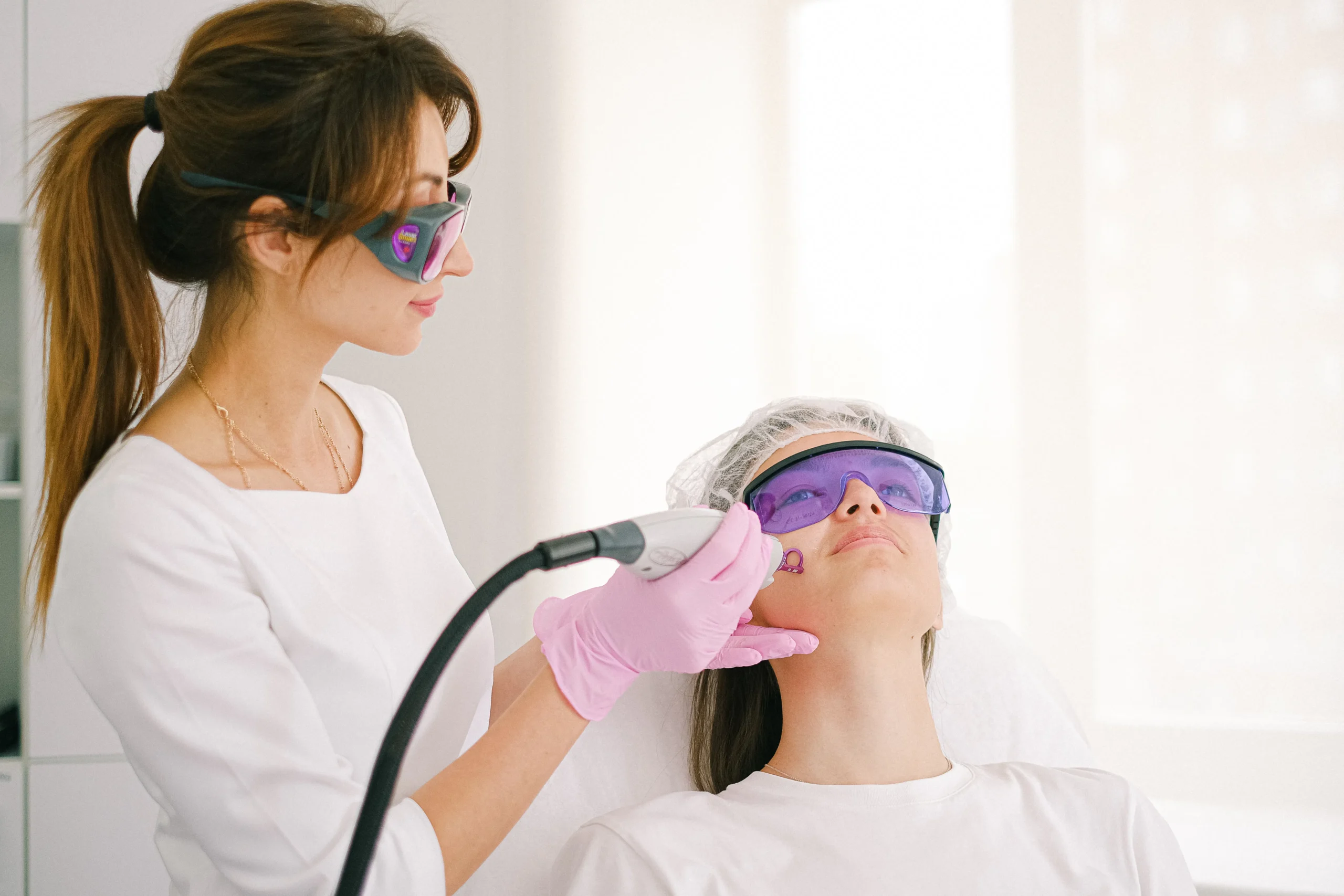
Photo by Anna Shvets on Pexels
Many people arrive at our clinic expecting carbon peeling to instantly and permanently erase enlarged pores, but that’s one of the most stubborn carbon facial myths we encounter. The truth is, while a single session can reduce sebum production by roughly 30% for several weeks, it doesn’t physically shrink your pore size. Instead, this pore minimizing treatment works by deeply clearing out debris, oils, and dead skin cells, which in turn tightens the surrounding tissue and makes pores appear significantly smaller and refined. It’s an important distinction for realistic expectations.
Another common misconception is the idea of a completely invisible, zero-downtime ‘lunchbreak’ treatment. While carbon peeling is indeed non-ablative and doesn’t involve the visible peeling of a traditional chemical peel, clients with particularly sensitive skin might experience slight erythema, or redness, for 2-4 hours afterward. We’re always upfront about this at Amsterdam Beauty Clinic; honesty about aftercare and immediate post-treatment effects is key to a satisfying experience. That’s something we often find ourselves explaining when people have had less-than-ideal experiences elsewhere, sometimes with a general beauty salon in Amsterdam that doesn’t specialize in advanced skin treatments.
Then there’s the ‘chemical peel’ analogy. We discussed in the previous section how the Q-switched Nd:YAG laser creates a photo-acoustic effect. This isn’t an acid-based process; it’s a mechanical and thermal interaction that gently exfoliates and stimulates your skin, making it safe for almost all Fitzpatrick skin types. This approach also explains why it’s highly effective for dark spot reduction and managing oily, acne-prone skin, without the harshness some associate with the word ‘peel’.
It’s also important to remember that carbon peeling is a superficial to mid-dermal treatment. While excellent for texture and mild pigmentation, it won’t be a permanent fix for very deep acne scarring or severe hyperpigmentation, which often require more intensive laser therapies. And honestly, those ‘DIY’ carbon peel kits you see online? They lack the precise nanosecond pulse duration of professional lasers and can cause real damage. Always seek professional guidance for these kinds of advanced skin treatments.
Why do these skin care stories refuse to die?
It’s surprising, isn’t it? Even with endless information at our fingertips, some skincare myths just refuse to fade. I see clients at Amsterdam Beauty Clinic almost daily who still believe things that simply aren’t true about their skin, particularly when it comes to treatments like the carbon peel. Why do these persistent misconceptions cling on so stubbornly?
Part of the problem stems from marketing. Terms like ‘Hollywood Peel’ promise appealing, immediate results, creating an expectation of instant perfection. This branding often glosses over the reality: skin health is a journey of cumulative improvements, not a single magic bullet. That disconnect, unfortunately, feeds plenty of beauty industry myths.
And then there’s the sheer volume of misinformation online. Just type ‘carbon peeling’ into a search engine, and you’ll encounter everything from genuine scientific explanations to dangerous, untested DIY kits. It’s incredibly difficult for the average person to discern reliable sources from outdated practices or outright fabrications. Many people simply cling to what they’ve heard or read first, making it tough for accurate information to break through.
We also face a general lack of scientific understanding. When I explain the Q-switched Nd:YAG laser and its photo-acoustic effect, the nuances aren’t always easy to grasp. It just feels simpler to imagine a ‘peel’ as a harsh, acid-based treatment, that’s the historical context many people have. This fuels the notion that carbon peeling is a harsh chemical process, when it’s really a gentle mechanical and thermal interaction.
Ultimately, good skin health requires informed, consistent effort. That’s why we at Amsterdam Beauty Clinic focus on educating our clients about what carbon peeling treatments can genuinely achieve. We want you to make choices based on facts, not on persistent fables that just won’t fade away.
Avoiding the pitfalls: what truly sets effective treatments apart
Photo by Gustavo Fring on Pexels
So, if misinformation spreads so easily, how do you really tell what works from what doesn’t? It’s simple: you have to look past the marketing hype and demand proof. Many clinics in Amsterdam promise flawless skin, but few can back it up with a clear, scientific explanation of their treatments. I see this all the time with treatments like carbon peeling; the “Hollywood Peel” label sounds great, but it tells you nothing about the actual mechanism.
Separating fact from marketing fiction
Real effectiveness hinges on science, not just a catchy name. When you’re researching any aesthetic treatment, ask specific questions about the technology. For carbon peeling, you need to know it uses a Q-switched Nd:YAG laser with a specific wavelength, targeting carbon particles, not directly burning your skin. If a practitioner can’t explain the photo-acoustic effect or why it’s safe for most skin types, that’s a red flag. They probably don’t understand it themselves.
Another huge pitfall is the rise of DIY kits. I’ve seen online ‘carbon peel’ kits that are dangerous. They lack the precise laser technology needed and can cause burns or permanent scarring. Never compromise your skin health with unverified home treatments. Post-treatment care is just as critical; neglecting high-spectrum SPF, even on a cloudy day in the Netherlands, can undo all the benefits and even cause hyperpigmentation. That’s a common, preventable mistake.
Choosing reliable practitioners in Amsterdam
Identifying reliable beauty resources means looking for transparency. Clinics should clearly outline their procedures, expected outcomes, and potential side effects. At Amsterdam Beauty Clinic, we prioritize educating our clients on everything from carbon peeling insights to general aftercare, ensuring they understand the science behind their glowing results. We use advanced equipment and train our staff extensively. Don’t be afraid to ask for practitioner qualifications and read reviews that mention specific results and client experiences, not just general praise. You’re investing in your skin, so choose wisely.
Carbon peeling’s true impact: what your skin really needs to know
After all the talk about what to watch out for, you’re probably wondering what the actual deal with carbon peeling is. What does it really do for your skin, especially here in Amsterdam? The truth is, when done correctly and with realistic expectations, an Amsterdam carbon peel can be a fantastic way to get that skin clarity Amsterdam locals often seek.
It isn’t a magic wand, though; that’s one of the biggest laser facial truths we stress at clinics like ours. What you get is a deep cleanse and a significant boost in skin texture. Remember, the laser’s energy targets those carbon particles, effectively vacuuming out dead skin cells, excess oil, and urban pollutants that clog your pores. I’ve seen it work wonders for clients dealing with oily or acne-prone skin, noticeably reducing sebum production for weeks after just one session.
But here’s where expectations need to be managed. While your pores will appear smaller because they’re clean and the surrounding tissue gets a gentle thermal tightening, the treatment won’t physically shrink them. Your genetic pore size remains. It also won’t erase deep acne scars or severe hyperpigmentation. For those concerns, you’d be looking at more intensive treatments, perhaps fractional CO2 lasers , a different ball game entirely. It’s about understanding its place as a superficial to mid-dermal treatment.
So, if you’re looking for that ‘urban detox’ for your skin, or a way to refresh your complexion without the downtime of a traditional chemical peel, the carbon peel is a strong contender. A series of 4 to 6 sessions, spaced a few weeks apart, is often what it takes to see lasting collagen remodeling and really make a difference. This structured approach helps clients achieve their skin goals effectively. For personalized advice on your specific skin concerns, we recommend chatting with a professional. You can explore our full range of advanced skin treatments at Amsterdam Beauty Clinic for more information.
Beyond the hype: carbon peeling versus other treatments
Photo by Khuram Naseem on Pexels
Many clients, after truly understanding what carbon peeling can and cannot do for their skin, naturally wonder how it compares to other familiar treatments. It’s a valid question, since the market is flooded with options.
Carbon Peeling vs. Chemical Peels
When we talk about a carbon peel comparison, the first thing people often think of is a traditional chemical peel. But they’re quite different. Chemical peels, like glycolic or TCA, rely on acidic solutions to chemically exfoliate the top layers of the epidermis, leading to visible shedding and downtime. Honestly, that week of flaking isn’t always practical for someone working in, say, a client-facing role here in Amsterdam.
Carbon peeling, on the other hand, is a non-ablative laser treatment. Our Q-switched Nd:YAG laser targets the carbon particles, not the skin directly, which means zero shedding. This makes it a fantastic alternative for those seeking a deep clean and pore refinement without the social downtime of a traditional peel. You get the benefits without the visible recovery period.
Carbon Peeling vs. Microdermabrasion
Microdermabrasion uses physical exfoliation, essentially sanding away dead skin cells with tiny crystals or a diamond-tipped wand. It’s effective for surface texture and mild congestion. However, for active acne, a microdermabrasion alternative like the carbon peel often makes more sense. The thermal energy from the laser, focused by the carbon, helps to kill P. acnes bacteria. This is a significant advantage for breakout-prone skin. Microdermabrasion can sometimes spread bacteria if not done meticulously.
Carbon Peeling vs. Hydrafacial
Then there’s the Hydrafacial, which is a wonderful treatment focusing on cleansing, exfoliation, extraction, and hydration through a vortex-fusion delivery system. It excels at infusing serums and providing immediate plumping hydration. But if your goal is significant collagen stimulation and long-term pore tightening through thermal action, the hydrafacial vs carbon peel debate leans towards carbon peeling.
Our carbon peel offers that deeper thermal effect, which is what truly encourages collagen remodeling over a series of sessions. That’s why at Amsterdam Beauty Clinic, we see the carbon peel as a unique hybrid: it’s part deep-cleanse and part thermal skin-tightening. It combines the immediate gratification of cleaner pores with the subtle, cumulative benefits of laser stimulation, offering a distinct approach to skin refinement that complements other treatments rather than just replacing them. You can learn more about our comprehensive skin treatments in Amsterdam on our website.
Understanding these distinctions helps you make a truly informed choice for your skin’s needs.
Tired of skin myths? Get the facts on achieving your ‘Amsterdam Glow’ with advanced treatments. Learn more about what Amsterdam Beauty Clinic offers.
People Also Ask About Carbon Peeling
Is carbon peeling actually a chemical peel?
No, it’s not a chemical peel at all! While called a ‘peel,’ it doesn’t use acids to shed skin. Instead, a special carbon lotion is applied, and a Q-switched laser targets it. This process removes dead skin cells and impurities through a photo-acoustic effect, not chemical exfoliation.
How does the carbon laser facial work on pores?
The carbon laser facial helps pores by deeply cleansing them and tightening the surrounding skin through thermal stimulation. It removes the debris that makes pores look stretched, so they appear smaller. It can’t change the actual genetic size of your pores, but it makes a noticeable difference.
Can I get carbon peeling done during my lunch break in Amsterdam?
It’s often called a ‘lunchbreak treatment’ because there’s no peeling or significant downtime. You might experience a little redness for a few hours, especially if you have sensitive skin. So, while you won’t be shedding skin, it’s not always completely invisible immediately after.
Is carbon peeling safe for all skin types in Amsterdam?
Yes, that’s one of its biggest advantages! Unlike some other laser treatments that target melanin, the carbon laser specifically targets the carbon particles. This makes it a safe option for nearly all skin types, from very fair to darker tones, even in our diverse Amsterdam environment.
What’s the difference between carbon peeling and a Hydrafacial?
A Hydrafacial is fantastic for deep hydration and infusion of nutrients, really plumping up the skin. Carbon peeling, on the other hand, focuses more on thermal collagen stimulation and deep pore cleansing with its laser action. Think of it as a hybrid treatment – deep cleanse meets skin tightening.
Can carbon peeling fix deep acne scars?
Honestly, it’s not the best tool for deep acne scarring. Carbon peeling is more of a superficial to mid-dermal treatment. For significant structural issues like deep scars or severe hyperpigmentation, you’ll likely need more intensive treatments like fractional CO2 lasers.